

Most crews buy wireless gear one emergency at a time. A video link because the director could not see the frame. Intercom because someone missed a cue. Microphones because the on-camera audio was unusable. Three purchases, three brands, three charging systems, three sets of batteries.
Buying them as one system is not about brand loyalty. It is about the specific ways mixed kit wastes your time on set.
What you actually gain
- Cross-compatibility inside a range. Pyro devices talk to other Pyro devices. You add a monitoring position by buying one unit, not a second system.
- One RF plan. Video and intercom fighting for the same 2.4/5GHz airspace is a real failure mode. When the intercom sits on 1.9GHz DECT and the video on managed 5GHz, they stop competing.
- One charging story. Fewer battery types is fewer things to forget.
- One support conversation. When something does not work, you are not refereeing an argument between two manufacturers.
“Mixed kit does not usually fail dramatically. It fails as twenty minutes lost, every single day.”
A three-layer build
Layer 1 — the picture, to whoever needs it
Pyro S - Wireless Video Transmission System (TX + RX) — $449
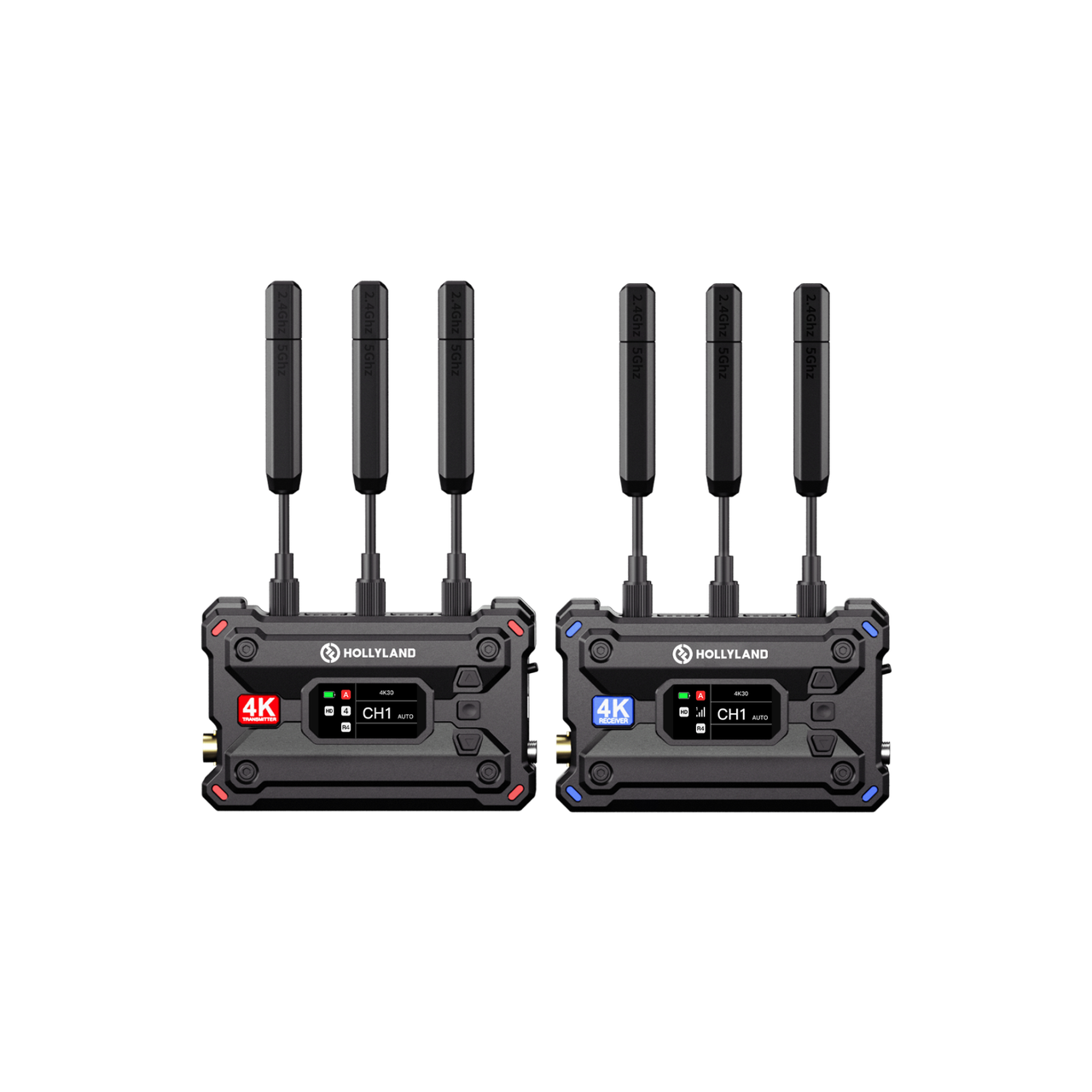
Transmitter and receiver in one box, 4K30, HDMI and SDI both present so it drops into a mixed camera package without adapters. Scales to four receivers as more people need to see the frame.
See the Pyro S →Need more range or more monitoring positions? Pyro Ultra holds a stable link to twenty receivers at up to 4,900ft. Want the monitor and the link in one object? Pyro 5 4K.
Layer 2 — the crew, talking to each other
Solidcom SE Pro - 4S - Seamless Team Communication — $679

Four people, ENC noise cancelling, radio built into the headset. No beltpacks means no beltpack-to-headset cable, which is the component that actually fails mid-shoot.
See the Solidcom SE Pro →Bigger crew: Solidcom C1 Pro 8S keeps eight people on headset-only hardware. Congested RF or wired-intercom integration: Solidcom M1 Pro 8B moves you to 1.9GHz DECT and a proper base station.
Layer 3 — the audio
LARK MAX 2 — $599
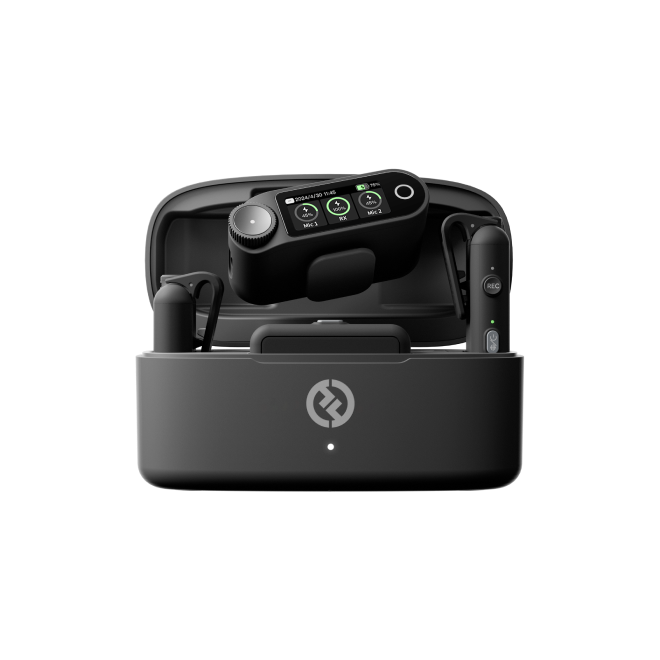
Two transmitters, a camera receiver, and monitor earphones. The earphones are the part that matters: monitoring your own audio is the only way to catch a rubbing collar or a dying battery before you have shot an unusable take.
See the LARK MAX 2 →Need the transmitter invisible on camera-facing talent? LARK M2S weighs seven grams.
Two additions people forget
Vcore - Wireless Video Transmission System — $219
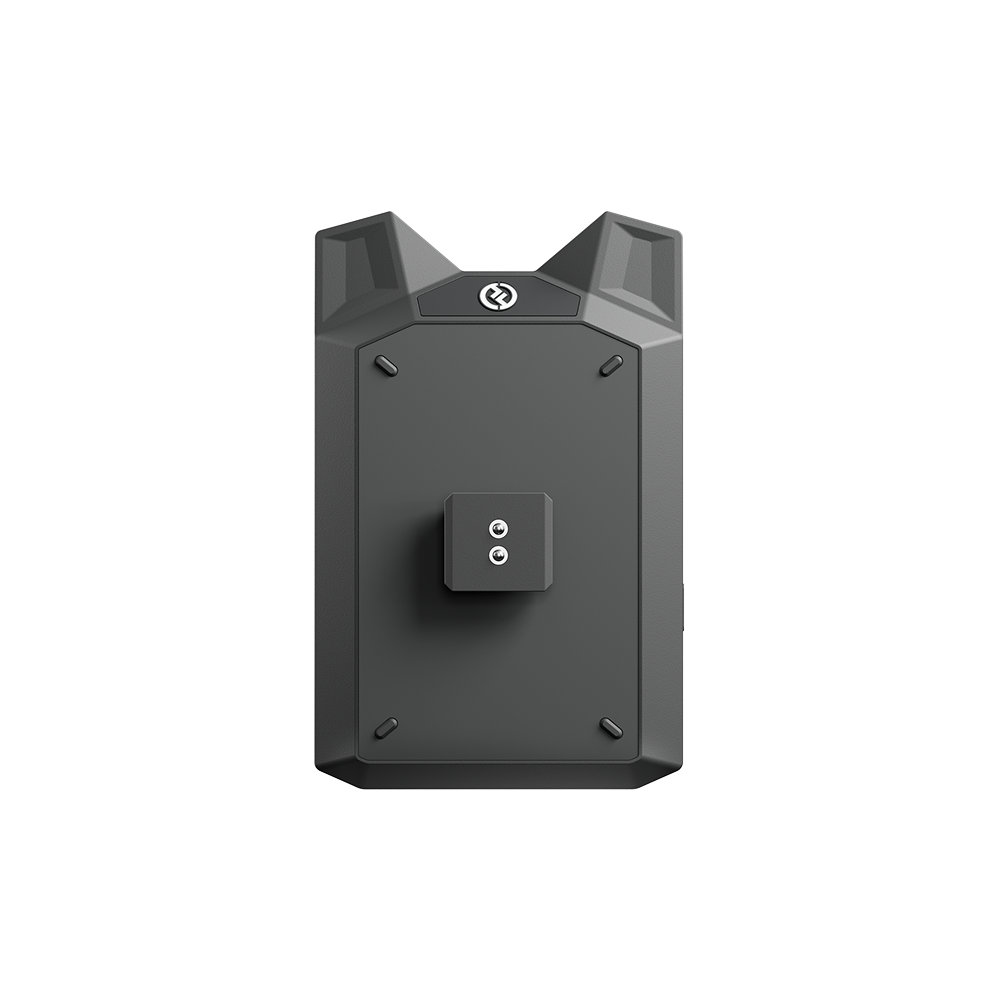
Everyone on set is carrying a screen. Vcore turns up to four phones into monitors over the Hollyview app, with the holder and magnetic mount in the box. For client viewing it replaces a monitor purchase entirely.
See the Vcore →Astra P1 — $1,999
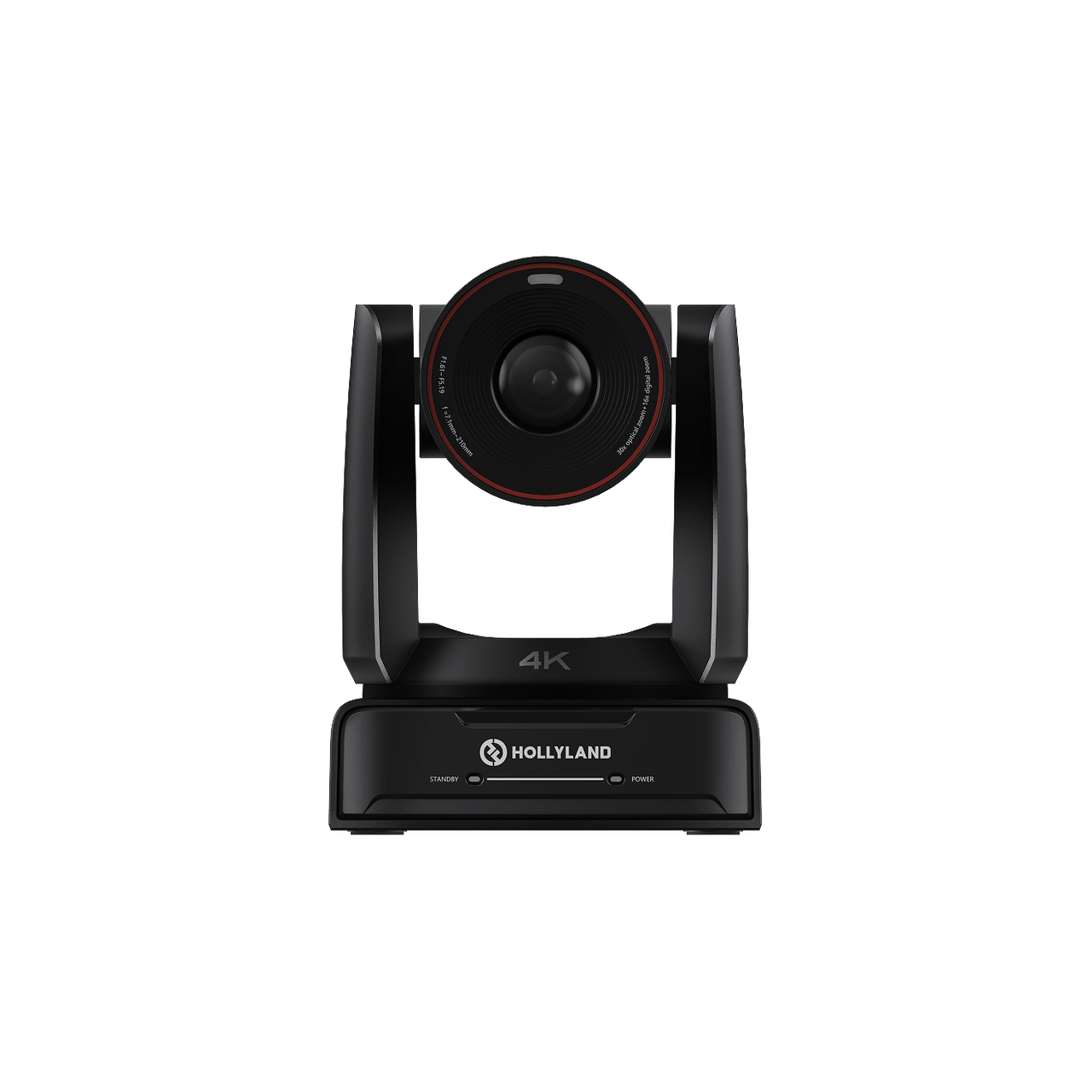
Thirty-times optical zoom and auto-tracking means a PTZ camera at the back of the room can follow a presenter with nobody operating it. For hybrid events and lecture capture it turns a one-person crew into a multi-camera show.
See the Astra P1 →Build it in this order
- First: video link. Not being able to see the frame stops the shoot.
- Second: intercom. Once more than three people are involved, shouting stops working.
- Third: microphones. Bad audio is fixable in post far less often than people hope, but at least the shoot finishes.
No sales tax. Letus builds and ships from Portland, Oregon, and Oregon has no state sales tax — the price you see is the price you pay. Not sure which configuration fits your camera? Message our team on WhatsApp and describe your rig.